

Ongoing Projects
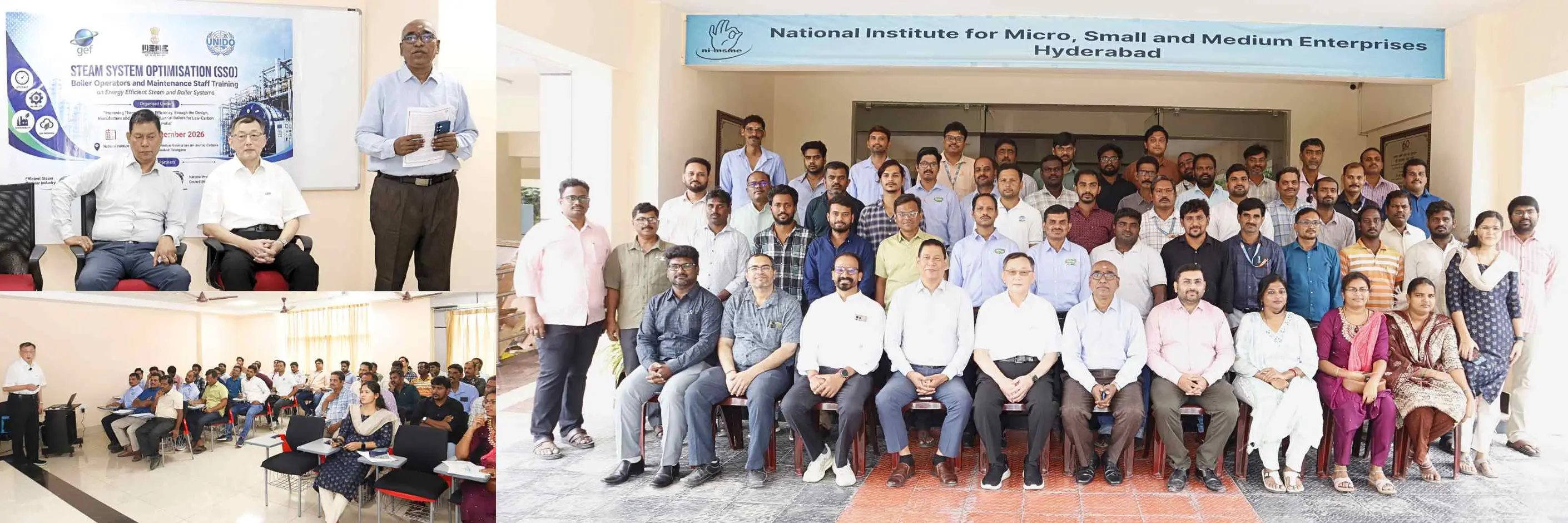
The UNIDO-GEF project titled “Improving thermal energy efficiency in the design, manufacture, and operation of industrial boilers for low-carbon MSMEs in India” focuses on addressing the high energy consumption and greenhouse gas emissions caused by inefficient boiler usage in MSMEs. The project recognizes that most MSMEs rely on outdated, poorly maintained boilers with low efficiency (around 45–65%), leading to excessive fuel use, higher costs, and environmental impact. It aims to intervene across selected clusters and sectors such as textiles, chemicals, pharmaceuticals, and food processing to demonstrate scalable, energy-efficient solutions. The core objective of the project is to create a sustainable ecosystem for energy-efficient boiler systems by improving design, promoting retrofits, and encouraging adoption of new efficient technologies, thereby reducing CO₂ emissions, lowering operational costs, and enhancing productivity. It also emphasizes capacity building, awareness generation, development of tools for energy assessment, and establishment of a knowledge-sharing platform, along with promoting gender inclusion and policy support for energy efficiency.
The project is structured around demand creation, market facilitation, and supply-side interventions, including training thousands of professionals, implementing best practices, and standardizing efficiency norms. In this framework, the National Institute for Micro, Small and Medium Enterprises (ni-msme) plays a central role as a key Project Execution Partner. It is primarily responsible for capacity building, knowledge management, policy advocacy, and execution of major project components. Its role includes developing training systems and materials, conducting training programs, creating and managing a knowledge portal, supporting standardization efforts, facilitating policy engagement, preparing work plans and reports, and ensuring coordination with stakeholders. Additionally, ni-msme is responsible for integrating gender and environmental considerations, monitoring project activities, and ensuring effective implementation and dissemination of best practices across MSME clusters.
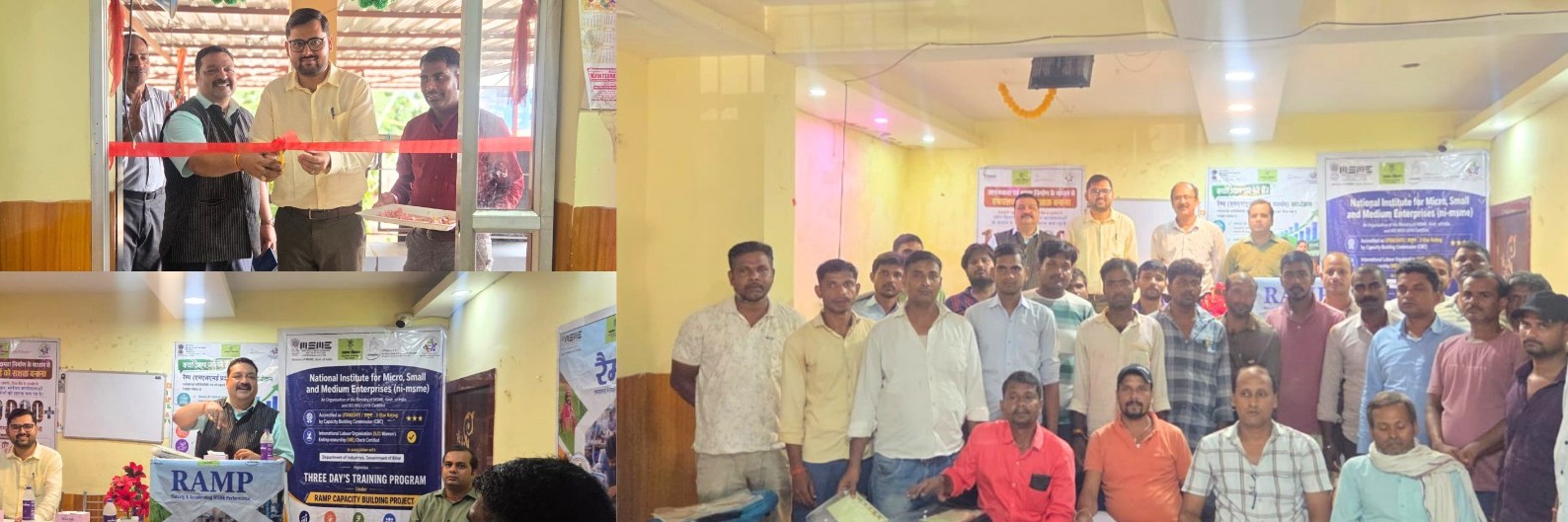
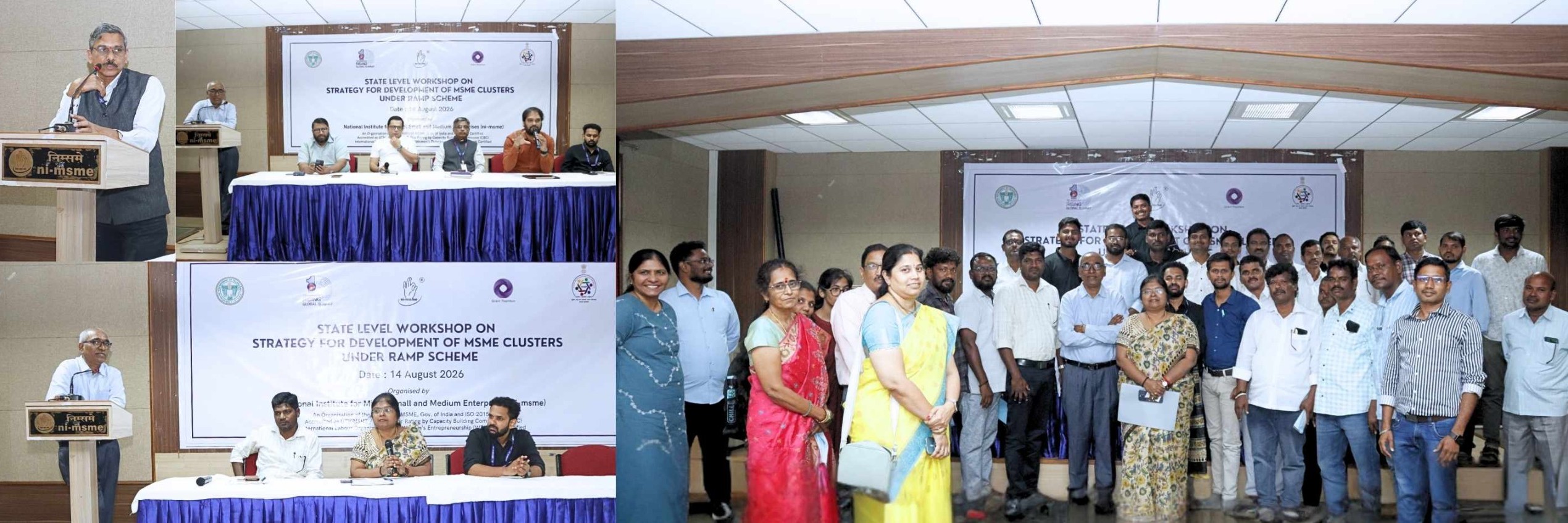
The Raising and Accelerating MSME Performance (RAMP) Programme has been effectively implemented across multiple states by National Institute for Micro, Small and Medium Enterprises, demonstrating a comprehensive and impactful approach toward strengthening the MSME ecosystem in India. Through its strategic interventions, ni-msme has played a pivotal role in capacity building, entrepreneurship promotion, and institutional strengthening. In Assam, the programme focused on a state-wide rollout complemented by officer training and thematic workshops, ensuring administrative preparedness and sectoral awareness. Andhra Pradesh witnessed large-scale outreach through 352 Entrepreneurship and Skill Development Programme (ESDP) workshops across 12 districts, significantly enhancing grassroots entrepreneurship. In Bihar and Madhya Pradesh, the emphasis was on strengthening institutional capacity through structured training of industry officers and exposure visits. Maharashtra’s implementation stood out with its focus on vendor development, financial literacy, and Government e-Marketplace (GeM) training, enabling MSMEs to access formal markets. Rajasthan achieved notable success by delivering sector-specific skill development training to over 12,800 participants, while Telangana advanced MSME growth through Enterprise Development Centres, thematic programmes, and vendor linkages. In the North-East, Manipur’s “Empower Manipur” initiative and Tripura’s EKP and EGP programmes benefitted nearly 24,000 MSMEs, promoting inclusive regional development. Chhattisgarh further strengthened sectoral capabilities through targeted training and expert deployment. Overall, ni-msme’s implementation of the RAMP Programme reflects a well-coordinated, multi-state effort focused on enhancing productivity, competitiveness, and sustainability of MSMEs through training, institutional support, and market integration initiatives.
The project titled “Driving the Green Future: Danish-Indian Collaboration in EV Repair” emerges from the growing global and national shift toward sustainable mobility, where electric vehicles (EVs) are becoming central to reducing carbon emissions and supporting a green transition. With the rapid expansion of India’s EV market, there is an increasing demand for a skilled workforce capable of handling EV repair and maintenance, which currently remains a critical gap. The project is designed to address this need by fostering international collaboration between India and Denmark, bringing together students, educators, and institutions to build technical competencies in e-mobility. Funded by the Danish Ministry of Foreign Affairs through the Globus Fund, the initiative emphasizes cross-border knowledge exchange and skill enhancement as key drivers for sustainable development. The primary objective of the project is to strengthen the capacity of Indian stakeholders in EV repair by developing relevant skills, modern training methodologies, and industry-aligned curricula. It focuses on collaborative learning through workshops, exchange visits, and joint problem-solving activities, enabling participants to gain practical exposure to EV technologies and maintenance practices. Additionally, the project aims to co-create updated teaching materials and training frameworks through partnerships between institutions such as NI-MSME and Danish vocational bodies, ensuring long-term impact and scalability. By integrating cross-cultural learning, technical training, and continuous curriculum development, the project ultimately seeks to build a future-ready workforce, promote sustainable industrial practices, and support the transition toward a greener economy.